Showing posts with label History. Show all posts

Thursday, June 24, 2010

The Evolution of Emperor Worship

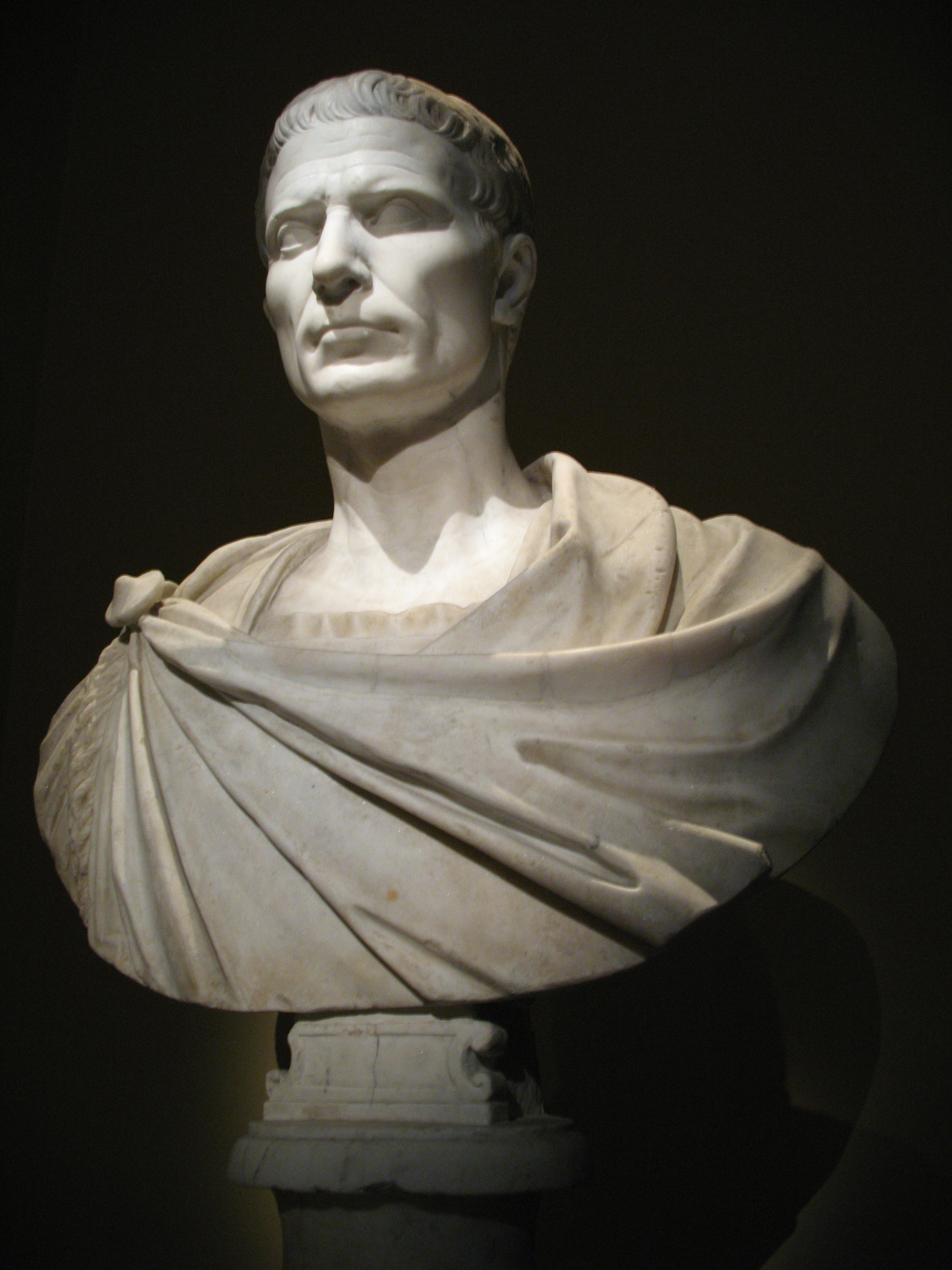
As you may have read a few weeks ago, Augustus Caesar was the first Emperor, whose authority was more of a subtle, de facto kind of rule, rather than the flamboyance of his descendants. He was also the first person to introduce the concept of a living divine leader into Roman politics, which had for almost five hundred years avoided deifying their leaders, unlike the Greeks and Egyptians. When Julius Caesar was deified post mortem by a guilty Senate, Augustus wasted no time in adding “son of god” to his list of many titles. As such, people were much more hesitant to go against him, for fear that their anger at his naked power grabbing might be perceived as impiety by the masses who adored him.

This is not to say that the Romans were all Agnostic pragmatists before Augustus Caesar, far from it. Many a popular assembly was disrupted or canceled because some appointed Pontifex claimed ill omens, signs which only seemed to appear when the assembly favored policies which the Senate opposed. Sometimes, this was seen for the crass undemocratic interruption that it was, but other times it succeeded.

Gaius Marius claimed to have found an eagle's nest with seven baby chicks in it – a large number of baby eagles for a single nest. He and his followers claimed that this was a sign from the gods that he was meant to serve seven terms as Consul, something that helped to sway Plebeian support for the unorthodox multiple terms that he served. The people of Rome recognized, for better or worse, that there was a law higher than the Roman codes.

Augustus took things a step further by claiming to be God's son, since God was Julius Caesar. By endowing himself with divine status, confirmed by the Senate's own apotheosis, he set the stage for the later Emperors and the Popes after them to claim infallibility. He also removed a key element to becoming a deity within his culture: dying. He was to his people a living, breathing divine entity, capable of bringing great good to his allies and terrible wrath upon his enemies.

It is really no wonder that this sort of thing got carried way too far by those who came after. It wasn't long before people were required to burn incense to the images of the sitting Emperor in order to enter local marketplaces as far away as Palestine and Asia Minor. But even deification couldn't save some Emperors from disfavor and assassination, as it seems even Roman piety had its limits.

Pax vobiscum

Thursday, June 10, 2010

Culture Wednesday: The Early Republicans

For those of you rooting around teh Interweb for American political posts, welcome! This blog is about the ancient world, but hey, stick around and you might learn something new.

During the early Republic, Rome had certain ideals which its citizens, for the most part, tried to uphold. This young, upstart city-state was based, like most ancient economies, on agriculture first and foremost. The ideal Roman, therefore, was a farmer, regardless of social status, personal wealth, or fame. Land ownership was key to obtaining respect, political office, and financial independence, and the ironically egalitarian rhetoric of the Patricians often praised the Roman farmer-soldiers for their simplicity of lifestyle, expertise with weaponry, and willingness to fight for the city and put her needs above their own.

Not unlike Sparta before it, or even America much later, the early Roman military system was militia-style conscripting with annual training during the slow winter season. If you owned enough property to qualify for the fifth census class, you were not only eligible for service, you were required to report for duty. Those in the lower classes were expected to obtain work as farm-hands, house servants, or really any menial work.

Scipio Africanus, who I so recently covered, served as a great bad example by the conservative Senators of his day for his tendency to wear his hair long, spend huge amounts of money on lavish parties, and generally live a life of excess matched today only by rock stars, royalty and professional athletes. Despite his unique lifestyle, he still restored Rome's honor by defeating Carthage, though the Senate was largely displeased at his decision to parlay with the residents rather than simply burning their city to ash and putting its citizens to the sword.

The Senate's desire to see Carthage destroyed seems an unspeakable war crime to us today, and became a famous warning when it did happen after the Third Punic War. Their other imperial-style cruelties would certainly horrify us today, as well as their military discipline, which included killing soldiers who drew a short straw. However, what set the Romans apart from the Greeks and other peoples was their practicality. This may have come about because of their farming ethic, but regardless of its source, it was their most powerful weapon.

While other 'great' civilizations were concerned with the true meaning of love or which day is proper for worshiping Athena, the Romans concerned themselves with supply lines, siege engineering, battle tactics, and in general, how to ensure victory. They learned well the lesson of the Second Samnite War: either destroy your enemy or forgive them, but never humiliate if you intend to let them live. Their world and culture, heinous though some of its elements may seem to our modern sensibilities, was born out of necessity and practical reality.

The Republic had its triumphs along with its faults, and lauded the heroes of old who were granted temporary Dictatorship and did what was necessary to resolve whatever crisis led to their election only to relinquish power when their term was up. Cincinnatus was a one such hero, who went right back to farming after he had served Rome and defeated its enemies.

What happened to the noble Roman, the farmer-soldier who was as skillful with a sword as he was with a plowshare? He was out-sourced. In short, the Patricians and wealthy Plebs utilized slavery so extensively that it became impossible for the working class to find work. The excesses promoted by Scipio Africanus became commonplace, and politics became overly corrupt. The Senate, having grown powerful since the Punic Wars, desperately tried to restore the old ethics of a hard day's work and a simple lifestyle, but even they had grown used to living in great estates with their every need attended to by slaves from every corner of their colonies. Their conservatism was short-sighted at best; treating symptoms instead of stepping back to understand the problem. They sacrificed their hard-nosed practicality for selfish, soft living, and many of them paid the price in their own blood.

The biggest danger to representative government, historically, is itself. The poor Plebs became frustrated at their lack of power and representation and turned to liberators like Lucius Cornelius Sulla, Gaius Marius, and Julius Caesar. The cult of personality toppled the old rhetoric of freedom and shared power, replacing it with hero worship, mob rule, and might-makes-right style politics. The old Romans eventually faded into the annals of history along with Romulus and the kings of old, their lifestyles gradually viewed as quaint instead of inspiring.

Pax vobiscum

Friday, June 4, 2010

Scipio Africanus: A New Kind of Roman

Known to readers of this blog as 'that guy who finally beat Hannibal,' Scipio Africanus was much more than just another Roman military genius. He grew his hair long, wore his toga in an unorthodox style, preferred Greek culture and language to Latin, and became a model of later charismatic commanders like Gaius Marius, Lucius Cornelius Sulla, and Julius Caesar. Scipio introduced the cult of personality into Roman politics, and it was a cult that would outlive and ultimately destroy the Republic itself.

Scipio got his start at age 17, joining his father on campaign against the Carthaginian invaders. He was present at the battles of Ticinus, Trebia, and Cannae, all of which ended with decisive victories for Hannibal. In 211 BCE a mere five years after that crushing defeat at Cannae, Scipio went to the Senate and requested command over the new Roman army which was being sent to Spain (the previous army had been utterly destroyed by Hannibal's brother Hasdrubal). The other candidates kept their mouths shut, believing Spain to be a death sentence, now that it was once again so firmly under Carthaginian control. Scipio promptly captured New Carthage and proceeded to win goodwill for Roman occupation. He set captives free, and returned a young Celtiberian princess to her fiancé and family, thus earning that tribe's allegiance against the Carthaginians.

Wisely plotting his strategic course, he sought to defeat the three Carthaginian armies in the area one by one, knowing that they would too far outnumber his own legions if he faced them all at once. He faced off against Hasdrubal Barca in the battle of Baecula and gained a victory by using a similar technique that gave Hannibal the victory at Cannae. Hasdrubal withdrew and marched on Italy, and in a controversial move both now and then, Scipio Africanus refused to pursue. There have been many theories of why he did this, but I tend to believe that it was his strategic good sense that prevented him from risking being caught between the remnants of Hasdrubal's forces and those of Mago or Gisgo, the other two Carthaginian commanders in Spain.

After gaining more Celtiberian allies, he defeated the two other Carthaginian commanders at Ilipa (modern Seville) in 206 BCE, and consequently drove their commanders out of Spain entirely. In addition to recruiting the local tribes, Scipio also made overtures to Syphax and Massinissa, two Numidian princes who agreed to cease their support of Carthage and supply the Roman army with cavalry. This was a huge win for the Romans because Numidian cavalry of the time outmatched nearly all other types, and was one of the chief causes of Hannibal's many successes. Syphax later switched back to the Carthaginian side, marrying one of their noble-ladies to seal the deal, but Massinissa proved extremely helpful in the later invasion of Carthage itself.

Scipio was the ultimate success story for the new culture of Rome: a culture which was fast-growing among the military and plebs. The old Roman model of farmer/soldier was quickly eroding under the increasing power of the Senate and their abusive practices toward the soldiers and the poor. The conservatives in the Senate distrusted his charismatic Greek mannerisms and disliked his fame. When Scipio won at Zama and ended the Second Punic War, he was greeted as a national hero in Rome and given his famous moniker Africanus. Several dissident groups offered to nominate him as Dictator or Consul for Life, but to his credit, he refused. It seems that this radical, innovative commander and politician had some old-fashioned Roman virtue in him after all.

Pax vobiscum

Tuesday, June 1, 2010

To Siege, or Not to Siege?

The basic siege tactic is to wait around until your enemy gets desperate enough to surrender, rather than starve to death. Sure, it's effective if the city has no allies and no hope of relief, but if they're well supplied, you could be waiting for years while your homestead's crops wither and you contract dysentery. Therefore, since they excelled at every other form of combat, it makes perfect sense that the Romans would use their engineering skills and upgrade a few local weapons to make them capable of destroying walls, piercing armor, and making life for the besieged as uncomfortable as possible.

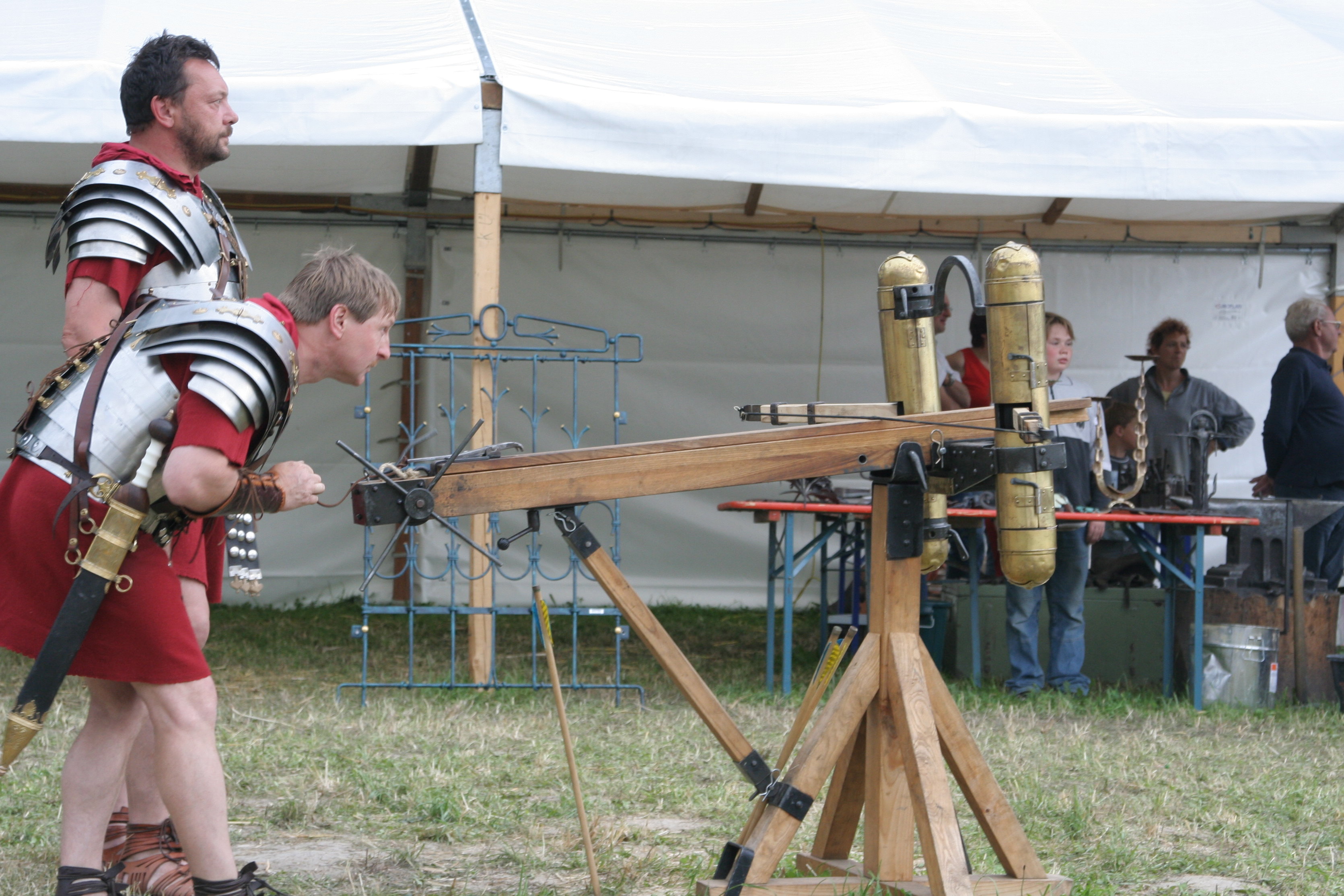
The Scorpio was the smallest of the artillery weapons, and was mostly used for sniping any one target within one hundred meters. It was basically a big crossbow whose bow apparatus consisted of two wooden arms connected to a torsion-mechanism. Its bolts could pierce the strongest armor, and the machine itself could be operated by one person. Every legion was supported by at least 60 Scorpios, giving the infantry a cover of deadly bolts to retreat under, should the battle prove contentious enough to warrant a second or third line engagement. It was mostly used to support Roman infantry in the field and in a siege, they were angled and fired in a parabolic fashion, quadrupling their range, but eliminating their precision. Still, the chance of getting instantly killed by one of 60 iron-tipped bolts that could rain from the sky any second was enough to cause the right kind of disruption within the besieged city.

The Ballistae was the Scorpio's steroid-popping big brother. Being much larger and more powerful, there were probably only a few Ballistae per legion, though reinforcements might bring more if there was a siege. In its early days, it hurled massive bolts over 460 meters, often impaling several men at once. Its purpose was mostly to cause fear in the beginning, though later it met with greater advancements which made it a very useful piece of field artillery. It was attached to wagons which would pull the terrible giant crossbow to wherever they could be deployed effectively, and let them rip into the enemy ranks.

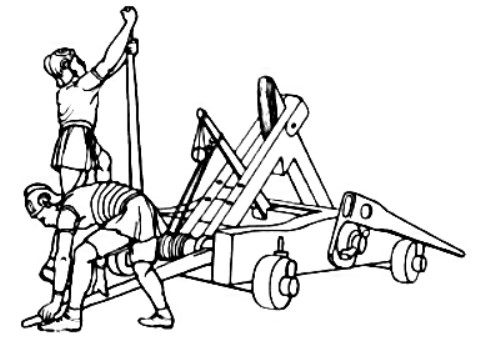
Let's face it: the real ultimate weapon of the ancient world was fire. Still a largely misunderstood and uncontrollable force in those days, the sight of fire alone could devastate an army's morale, much less the thought of having balls of the stuff thrown at them. The Onager existed for just this purpose. You may notice in the picture that the payload is contained in a sling, which increases its range, but pretty much destroys any sense of precision. It worked well enough to hurl pots of pitch over enemy walls to set alight whatever they happened to land on, wrecking food supplies, killing soldiers or civilians, and giving yet another calamity for besieged cities to fear.

In the Medieval period, many of these weapons would evolve in different ways; the Scorpio being replaced by the crossbow, the Ballistae by . . . well, better Ballistae, and the Onager by the catapult, which had a fixed bowl instead of a sling and was used to hurl hot coals or large boulders at whatever you want to die. As Hannibal learned the hard way, you can't take a city without laying a siege, and the Romans show us time and time again that it is always best to be prepared.

Pax vobiscum

Monday, May 31, 2010

The Genius of Hannibal

I thought I'd take some time out today to simply marvel at one of history's most famous tacticians. Hannibal's genius cannot be understated, in my opinion: he was a man far ahead of his time and culture, and had his family been positioned a little more favorably within Carthaginian politics, it seems likely that history would remember the Second Punic War as the event that ended Roman expansion and brought the rogue Italian superpower to heel, paving the way for Phoenician hegemony throughout the Mediterranean.

The Barca family had a reputation as fierce fighters and noble warriors. However, Carthaginian culture was largely based on trading and the mighty city trained only a small percentage of its residents as professional soldiers, hiring most of the work of battle out to mercenary groups. Hence, though Hannibal's father Hamilcar fought the last eight years of the First Punic War with virtually no support from Carthage itself, his sacrifice and continual victories counted for little in the eyes of Carthaginian politicians, who allowed him an expedition in Spain after the war mostly to get rid of him. Young Hannibal joined his father in this conquest, and spent most of his adolescent years encamped with the soldiers, who took a liking to the young warrior and trained him in every weapon they could. Thus, when Hannibal one day took up his father's reigns and led the army, he commanded strong personal loyalty from them and there is no report of mutiny among his troops to be found in recorded history.

I like to believe that Hannibal's military education was two-fold: he likely learned about the more efficient “guerilla” tactics from his father, and the more practical, battlefield realities from the encamped soldiers. Thus, we have events like the Battle of Trebia, in which Hannibal hid some allied forces to execute an ambush against the already engaged Roman infantry, whom he had also deprived of their morning breakfast and forced to walk through the freezing Trebia river. That battle alone combines many elements from Hannibal's likely upbringing: the ambush tactics his father perfected, plus knowing that an unfed army poses little threat to a well-supplied force.

The biggest innovation in Roman tactics of that time was the maniple system, which allowed different lines of infantry to assault the enemy's front lines while having an avenue to fall back should the battle prove difficult. While they did deploy cavalry on their wings, their only purpose was to engage the enemy cavalry. This helped to win many battles, but was still essentially focused on the enemy's front. Hannibal knew that his forces would eventually be facing larger numbers, and so he focused on mobility, harassment, and flanking.

His wisdom in fighting battles also extended to knowing when he could not win. While Fabius was struggling to contain him in southern Italy, Hannibal tricked one of the containment armies by attaching torches to a herd of oxen and driving them through the forest at night. Thinking it was the enemy army preparing an ambush, the legions followed the torches, determined to out-ambush this troublesome Carthaginian. While they were busy chasing oxen, Hannibal led his forces through the now undefended pass and made for resupply in the north.

The saying goes that amateurs study tactics, while professionals study logistics. Unfortunately for Hannibal, he never fully secured supply lines from Carthage, and had to repeatedly fight for resupply from the Gauls or whichever Italian city decided to join him that week. Though he spent an impressive ten years in Italy campaigning successfully against the Romans, it was only a matter of time until the Romans took the war to Carthage, giving command to the unorthodox general Scipio Africanus, who would use Hannibal's own tactics to gain a victory over Carthage and Hannibal at the Battle of Zama.

Pax vobiscum

Wednesday, May 26, 2010

The Other Italians

Before the rise of Rome and its Empire, Italy was filled with a multitude of people groups, mostly tribal and nomadic, but united in themselves by common language and culture. One such people was the Samnites, whose culture was a combination of urban and tribal elements. They maintained their political independence until the Third Samnite War circa 290 BCE, when their land was taken by the Romans for good.

The Samnites worshiped the typical Greco-Roman Pantheon, especially Mars, Athena, and Hercules, and had the same tendency toward divination by birds and animal entrails. Their cities were surrounded by well-tended farms, while their shepherds would lead their flocks along a pre-determined grazing trail throughout the year.

Warfare was of utmost importance to these Latin tribesmen, and they had a reputation as ferocious fighters. Many believe that the Manipular system adopted by the Roman legions originally belonged to the Samnites, and they certainly understood the importance of army flexibility on the rough terrain of their homeland. They knew their lands well, and often used them to their advantage over the Romans and other peoples with whom they came into conflict.

Bravery served a dual purpose for these rugged shepherds as it directly affected their choice in marriage. Men who had performed great acts of bravery on the battlefield got first choice among the eligible women for a bride. Emotion in the ceremony itself was strictly forbidden, and men were expected to simply choose the woman they wanted with the approval of the tribal elders and priest.

Samnites fought with many weapons similar to Roman arms, including the javelin, spear, and rectangular shield (though theirs were tapered toward the bottom). However, they also excelled at using slings as well as the bow-and-arrow, crafts they no doubt perfected while protecting their herds from wild beasts or neighboring tribes. In one encounter with the Roman army, the Samnites had trapped several legions in a narrow pass called the Caudine Forks and positioned their archers high upon a nearby mountain to keep their enemy hemmed in.

The story goes that Gaius Pontius, the Samnite commander, was at an impasse when that Roman army surrendered to him. He dispatched a letter to his father, Herennius Pontius, a statesman and politician, to pick the old man's brain. Herennius responded in a letter that the Roman army should be freed, for which Rome would be grateful and possibly become an ally. Not liking this idea, Gaius sent another letter to his father, and this time the reply came back that the entire army should be executed, and Rome would then cease to be a threat for at least a generation. Gaius Pontius foolishly decided to try and have his cake and eat it, too, disarming the Romans and forcing them to pass under the “yoke”- a sort of doorway made of their own spears. The army returned unarmed and ashamed, but eager to have revenge and win back their lost honor. After honoring a five-year peace that they agreed to in their terms of surrender, they struck back hard at the Samnites and won the war, executing Gaius Pontius in the process.

Though they showed great promise as an up-and-coming civilization, the Samnites fell prey to their divided, tribal nature, and the Romans were able to play one family against another, successfully subduing their southern neighbors and incorporating them into Roman society as slaves, soldiers, and farmers.

Pax vobiscum

Monday, May 24, 2010

The Battle of Alesia

In 52 BCE, the Gauls had united in a last-ditch effort against the invaders. Any one tribe who stood up to the Romans in recent memory had been utterly defeated, but now there was a new hope. The tribes had convened a council and selected one man to lead the rebel army to victory and restore freedom to their war-torn homeland. And that man's name was Vercingetorix.

Using hit-and-run cavalry tactics while taking refuge in well-defended forts gave this rebel leader a few victories over the Roman army, led by the famous and able Gaius Julius Caesar. In one such engagement, Caesar's 12 legions had attempted to storm his position at Gergovia, Vercingetorix drove them back, killing 700 legionnaires in the process and nearly causing a mass route of the entire army. Caesar was clever, though, and chose from then on to hunt down small detachments of the larger Gallic army, whittling their forces down to a more manageable size. Vercingetorix went with his typical play of strategically withdrawing his troops to a fortified position: the town of Alesia, atop a small hill.

I can only imagine the thoughts that must have consumed this last, best hope for Gaulkind watching helplessly from the city walls as the Romans built their own walls to solidify their defense. He had to witness the slow deaths of the women and children of the city, who starved to death after being expelled from the city and were then forbidden to pass through the Roman camp. He dispatched scout cavalry in an attempt to slow the construction, hoping to last until the relieving Gallic army arrived. The situation was desperate, and his men growing close to insubordinate treachery when a Gallic army of 100,000 arrived to relieve the siege. Hope was in the air that at long last, the Romans would be driven back and they would be free once again.

The Romans were now facing a battle on two fronts, but they had the luxury of their two walls, which kept them very well protected from the combined forces of 180,000. Their own 60,000 legionnaires were disciplined and well-armed; their foreign auxiliaries ready to do their part. After a few skirmishes and one night attack, the Gauls took a few sections of the Roman trench. They prepared for an all-out assault on the weakest point of the fortifications – a section where the two walls met with boulders and other natural hindrances to construction, a place Caesar had attempted to conceal.

The relieving force assaulted first, charging straight into the infantry lines and meeting the Romans steel to steel. Caesar ordered his men to hold the line while riding behind their ranks and cheering them on. He then led a counter-attack which drove off Vercingetorix's besieged men, who had sallied out of Alesia to support their Gallic compatriots. His line, weakened by the men that Caesar took to defend their rear, began to fall back and Gaius had to roll the dice. In a move both brilliant and incredibly risky, he took 6,000 cavalry with him and circled around the massive Gallic horde of 60,000, flanking them and cutting deep into their assault line. The Roman infantry, seeing their commanders risking their necks, were inspired by their bravery and pushed forward, pinching the Gallic line and causing the undisciplined tribal army to rout. Roman cavalry took over from there, hunting the fleeing soldiers down without mercy and laying waste to any hope that Vercingetorix maintained of being freed from this terrible siege.

A few days later, the mighty Gallic warlord surrendered, giving up his sword and armor to Caesar, who gladly accepted. With this defeat, Gaius Julius Caesar would forever solidify Roman domination over the Gauls.

Pax vobiscum

Friday, May 21, 2010

Julius Caesar Part II: The Later Years

When we last left old Gaius Julius Caesar, he had just won Consulship for the year in 59 BCE by a nasty, corrupt election that left no Senator clean, including Caesar's most tireless opponent, the notoriously incorruptible Cato. Marcus Calpurnius Bibulus was elected to serve as the second Consul, but would prove to be an ineffective check against his fellow executive. Supporting Caesar were Crassus, to whom Julius owed his freedom, and Pompey, whom Caesar recruited by promising to support land redistribution, a wedge issue amongst the Senators, and one that Caesar would use to cast the elite into the role of petty oligarchs and himself as the egalitarian savior of Rome.

When Caesar proposed a series of reforms designed to redistribute tracts of land to the poor, Crassus supported it on the Senate floor, while Pompey garrisoned his soldiers inside the city, frightening the moderate Senators into passing the decree. Seeking divine intervention, Bibulus tried to declare foul omens and therefore end the assembly prematurely, but he was chased off by armed supporters of Caesar and a bucket of sewage was thrown onto him as he rushed to his home to remain until the end of his term. The law passed without further delay, and thus was the First Triumvirate born: an alliance of three ambitious and savvy populists who would ultimately turn on each other. Caesar and Bibulus' Consulship was so one-sided that the Romans jokingly referred to the year 59 BCE as the Consulship of Julius and Caesar.

Caesar's father-in-law was elected as Consul during the next term, and it was lucky for Caesar because the Optimate Senators were thirsty for his blood. Instead of being confined to stewardship of a nearby uninhabited forest, Caesar's friends saw to it that he was appointed the governor of Cisalpine Gaul and Illyricum, in northern Italy and just east of the Adriatic Sea. He was given command over four legions and was now prepared to fight his way out of his ever-increasing debt. He made war on some local tribes which had been arming themselves, and made some money from their spoils. His term as governor was made to be five years instead of the usual one, which was lucky because otherwise his debts would have made him a slave, and he would have faced prosecutions for his quasi-legal activities while serving as Consul.

His campaigns in Gaul led him all the way to Britain, which he invaded under the pretense that they had aided a local Gallic tribe against him, a shaky accusation against anyone other than the Britons, who were mostly Gauls themselves and very similar in culture. His first invasion didn't go well and he had to return to the mainland, but he succeeded following season, securing Roman-allied control over the southern portion of the island.

Meanwhile, back in Rome, Caesar's daughter Julia, whom he had married to Pompey to secure his alliance, died during childbirth in 54 BCE. He offered him his niece Octavia, but Pompey eventually refused. Crassus died the next year while trying to invade Parthia in the east. Pompey weighed his options carefully and chose to marry Cornelia, the daughter of Caesar's enemy Quintus Metellus Scipio. In 52 BCE, political violence in the city got so bad that Pompey was declared the sole Consul, an office very different from Dictator because a Consul is answerable for their actions in office while a Dictator is not. While in office, Pompey blocked an attempt by Caesar to serve as Consul in absentia, though this had been allowed in previous years. The Triumvirate was broken and the two men left would now fight over the real prize: Rome itself.

That same year, there was a massive rebellion in Gaul led by Vercingetorix, a charismatic and capable military leader who defeated the Roman legions on more than one occasion during the war. Eventually, the Gallic forces were defeated by superior technology through the extensive siegeworks in place at the Battle of Alesia and Vercingetorix was forced to surrender. I'd like to go into more detail here, but rest assured, there will be coverage of these battles in upcoming Military Mondays.

In 50 BCE, Pompey and the Senate ordered Caesar to lay down arms, disband his troops and return to Rome. Caesar believed that it was a trap; that Pompey, who had now joined his enemies, would lead the way in prosecuting Caesar for crimes real and fabricated. He was probably not far off, for at one point that year Pompey accused Caesar publicly of insubordination and treason. January 10, 49 BCE, Gaius Julius Caesar crossed the Rubicon River with one legion and set off the Civil War. When many of the cities in northern Italy surrendered willingly to the invading legion, Pompey and his Senator allies abandoned Rome and sailed for Greece, taking with them every ship in the harbors of southern Italy. And so Caesar, being unable to chase his quarry, set off to challenge Pompey's lieutenants in Iberia, declaring, “I go to fight an army without a leader, so as later I may fight a leader without an army.”

He swept up the remains of forces loyal to Pompey and the Optimates in Iberia and made passage to Greece, where he would square off against his old ally and former son-in-law. At the Battle of Dyrrachium the next year, Pompey's army, which outnumbered Caesar's own legions at least 3 to 1, easily broke through Caesar's battle lines and his army routed. Caesar himself withdrew, and Pompey probably could have ended the entire war then and there, but his years of alliance with Caesar had taught him to be wary of this crafty populist. He feared a trap, and so did not pursue the enemy legions. Even Caesar remarked later that victory had belonged to his enemies, if only one of them would have claimed it.

His forces resupplied and fought the Battle of Pharsalus, in which they won an impressive and decisive victory for Caesar. The Optimates' power now broken, they fled in all directions, while Pompey sailed to Egypt where he believed he might find refuge. Instead he was assassinated, and his head presented to Caesar by Pharaoh Ptolemy XIII, who believed the gift would win him Caesar's favor. It worked in the opposite, however, and Caesar soon cast his support for Ptolemy's sister, Cleopatra VII, helping her to secure the throne of Egypt before he left. Caesar maintained a close relationship with Cleopatra, and there are historical rumors that they had a secret love child. He could have never married the Egyptian queen, however, as she was not a Roman citizen.

There was still work to be done, so Caesar granted immunity to many of his former enemy Senators, while mopping up the remnants of Pompey's forces, defeating all military opposition by 45 BCE. He had been elected Dictator in 48 and again in 47 BCE. In 46 he was appointed as Dictator for an unprecedented 10-year term, which undoubtedly led to his downfall two years later.

On the 15th of March, 44 BCE, Caesar was attending a session of the Senate. A group of Senators had organized a conspiracy against this perpetual Dictator, calling themselves the Liberatores, or liberators. They lured Caesar into a false state of security by gathering around him to support a bill, and then proceeded to stab him repeatedly until he was dead. As many as 60 Senators participated in the assassination, and declared that Rome was now a free Republic once again.

Ultimately, Caesar's death did nothing to stem the tide of anti-Republican sentiment. In the old days of Rome, citizens were expected to be loyal to the State first, and many of the cautionary fables from the early years involve fathers ordering the executions of their own children if they betrayed the Republic. The shift from Republic to Empire was a gradual one, and as I said last week, Caesar is by no means the first ambitious Senator to have delusions of kingship. However, because the people had come to believe, generation after generation, that the Oligarchical Senators did not have their best interests at heart, they turned to Dictators and Emperors to right the wrongs that their own corrupt and bogged down bureaucracies had either created or failed to counteract. The fall of the Republic, and indeed Caesar's life as a whole, should send shivers down the spine of any government official, elected or otherwise, who fails to care for their citizens.


Pax vobiscum

Saturday, May 15, 2010

Julius Caesar Part 1: The Early Years

 The Roman Republic had several huge problems by the time young Gaius Julius Caesar was born in 100 BCE. The Patrician Senate was in the midst of a conservative freak-out, fearing the now armed mob that Caesar's own uncle, Gaius Marius, had created by recruiting soldiers from the poor. Though they had fought hard against any reform that would give the Plebeians equal power, they couldn't stop the shift that was occurring right before their very eyes. And when Caesar was about 12, a wholly unprecedented and fearful thing took place: Lucius Cornelius Sulla, incensed at the Senate for trying to grant his command against Mithridates VI to Gaius Marius, used his army to lay siege to Rome and enter the city by force. Caesar later referred to this event when he was looking across the Rubicon years later, pondering the same course of action.

Caesar's early life was probably fairly easy, coming from a wealthy Patrician family and inheriting a massive estate at the age of 16 when his father died suddenly while tying his shoes. However, the social and political unrest in Rome which so frequently erupted in violence soon engulfed even this promising young man, who married another wealthy Patrician and had been named the High Priest of Jupiter. Sulla returned from Asia Minor only to fight another war at home; a purge of the Marian supporters who still opposed him. Because young Gaius was Marius' nephew, he was stripped of his inheritance and his wife's dowry, as well as his office of priest. If not for the pleading of Caesar's relatives who were loyal to Sulla, he may have even been executed. Though he was born a wealthy Patrician, he was now a man with no titles or inheritance to rely upon. So, he did what many young men without title or prospects continue to do today: he joined the army.

He won the Civic Crown, the second highest honor available to fighting men, during a campaign in Asia Minor, and after Sulla finally stepped down as Dictator and restored Consular rule, Caesar felt it safe to return to Rome, though he was little better off financially than when he had left. He entered the legal profession, having a natural gift for public speaking, and made quite a name for himself as a skillful prosecutor. He took on several high-profile cases involving corruption by retired Governors and other officials, gaining convictions most of the time and gaining the adoration of the masses, who were growing ever-weary of the corruption of their leaders.

While sailing to Rhodes to study under a skilled rhetorician, he was kidnapped by Cilician pirates and held for ransom. He continued to act the part of the superior Roman in captivity and even swore to his jailers that he would have them all crucified for this act. They believed he was joking, but after the ransom was paid, he raised a fleet of warships and hunted them down. While they were being held prisoner in Pergamum, the local Governor thought that it made more financial sense to sell them as slaves, but Caesar caught up with the traders who purchased them and saw to it that every last one of them hung on a cross. He had their throats slit beforehand, which is a kindness compared to the slow death of crucifixion. Nonetheless, the message was sent that Gaius Julius Caesar intended to crush his enemies completely, no matter who they were or what efforts were required.

When he returned to Rome he decided to take up politics and was elected Military Tribune, and over the next ten years he continued to climb the political ladder, gaining higher and higher appointments in the Senate. He made many of them nervous with his constant outward support for the memory of his uncle, the late Gaius Marius. In 63 BCE, he convinced a Tribune to prosecute an optimate Senator for a political murder which took place 37 years before. The case ended in a verdict of guilty, the crime itself being treason, and the Senator desperately appealed. During the opening of the appeal, one of the Praetors adjourned the trial temporarily, and Caesar told the Tribune to let the matter drop. His point had been made: do not mess with me.

Unfortunately, the Optimates continued to harry his every step, bringing in accusations of bribery and involvement in coup attempts. The Optimates and the Populares were kind of like political parties, but much less unified than those of today. Basically, the Optimates favored laws and policies that benefited and empowered the Patrician class and the Populares gained power and popularity by supporting policies of reform that could benefit the Plebeians. Remember that Patrician doesn't necessarily mean rich any more than Plebeian means poor. This was a kind of Republican monarchy, with the Patricians claiming descent to the original Senate as their right to rule. It might seem strange that Julius Caesar, a Patrician of the very aristocratic family Julii, would court Plebeians for power, but he was not wealthy like most Patricians. In fact, when he was appointed the Governor of Hispania Ulterior, the southern part of modern Spain, he was up to his eyeballs in debt and wasn't allowed to leave until he had satisfied it. Along came Marcus Lucinius Crassus, a copiously wealthy Senator who wanted Caesar's support against Pompey, the young upstart army commander who refused to play by traditional rules. Caesar agreed, and Crassus paid some of his debts and guaranteed the others, allowing Caesar to enter his new commission.

He secured his province well, defeating many local Celtic tribes in battle, and even earning the right to a Triumph parade back in Rome. However, he had his eye set on Consulship as well, and could only muster enough political clout to enact one of the two. Keeping his eye on the prize, he chose Consulship, and earned it through an election that was dirty on all sides.

We'll talk more about old Gaius Julius next week, but for now let's critically analyze this guy. I have to look upon Caesar with some admiration purely for his ability to rise to the top, regardless of negative personal situations. After all, he was stripped of land and titles by Sulla, and had to re-make himself if he hoped to even survive, much less gain any power. If not for his public speaking skills, we probably wouldn't even know his name. But he took what skills he had and put them to good use, using his status as a Patrician to borrow money and pull strings when he needed to.

That being said, I don't think he is quite the 'pull-yourself-up-by-your-bootstraps' example that some historians have made him out to be. In truth, if he were a Plebeian Tribune and all of this happened to him, he would surely have been killed, not having the family connections to keep him alive. He may have been able to borrow money, but he certainly would have fallen into indentured servitude without a wealthy guarantor. He would probably have been killed or sold as a slave by the pirates who kidnapped him, since he wouldn't be worth a ransom.

Though he was an impressive individual who made the best of his situation, we should not ignore the impact of his title as a Patrician, nor the involvement and help of his family. The fact was, though you didn't need to be a Patrician to be wealthy, you did need to be one in order to be powerful, and all the reforms that the Plebeians had been fighting for politically were still coming to naught because the aristocrats in Rome did not want to really share power. Their stubbornness was their ultimate undoing, as was their use of violence to make political gains. Caesar can hardly be blamed for some of the more thuggish tactics he took later on, since he was not the first Senator to resort to violence when Democracy failed him.

Ultimately, I see Caesar as both an impressive individual and a product of his time. Next Friday, we will look closer at some of his later career and you can decide if he is truly the hero who saved Rome from corruption or the villain who killed the Republic when it no longer suited his political ends.

Pax vobiscum

Wednesday, May 12, 2010

Women in Rome

One of the more famous Roman myths is the story of the Sabine women. Romulus, Rome's founder, gathered outcasts from neighboring cities to Rome to populate it. Unfortunately, they were mostly men and had been exiled from the other cities for fraud, theft, and other bad behavior. If Rome was to have a future, they would need to find women and reproduce. The nearby tribe of the Sabines had plenty of women, but they were unwilling to allow their daughters to marry the scoundrels that lived in Rome. So Romulus hatched a nefarious plot.

He invited the Sabines to a massive feast just outside the city gates. Since it was an all-you-can-eat affair, they brought their children, daughters, wives, and sisters along for the party, and it carried on for some time. When the Sabine men had become drunk, the Romans seized every unwed woman they could find and carried them into the city, locking the massive gates behind them. There was war with the Sabines, and the story goes that it was the abducted women who prevented all out slaughter on both sides, agreeing to live in Rome. Since they had been raped, they were considered ruined for other men, and they knew that their best bet at survival lay in submission to their newfound Roman companions.

This story seems so repugnant to modern sensibilities that it's hard for us to imagine how any culture would place it in their oral history and public record. However, it certainly helps to shed light on the position of women in the Roman world. For the most part, women weren't permitted to hold office, own property, or choose a husband. Their family structure was such that the father or Paterfamilias held legal power over life and death for all his children. At least for the young boys there was an age of independence, but a girl might live in her father's house all the days of her life.

It was assumed that marriage would eventually lead two people into a deep romantic friendship, but first and foremost, marriage was duty. They needed to continue their family line, and they were very often betrothed from birth. As a result, marriage became a burdensome chore and many soldiers and aristocrats started putting off, visiting prostitutes and keeping female slaves and concubines instead. Augustus Caesar, desiring to preserve Roman culture despite helping to destroy its Democracy, passed a series of laws and regulations governing betrothal, marriage, and success.

He promoted soldiers who fathered many children, fearing that Rome was becoming dangerously underpopulated. He gave the best seats in the Coliseum to married men, and granted some say in property disputes to married women who bore three or more children. He penalized wealthy bachelors and single women by heavily taxing their inheritance, and made it illegal for husbands to murder adulterous wives, preferring that they divorce them instead.

Despite all these reforms, women were a far cry from men in terms of power in almost every measurable criteria. Though they could sue for divorce themselves, the courts often ruled with the father, giving him custody of their children. And if their husband was involved in a war, there was always the chance that he would return with a German or Phoenician slave girl whom he would take as a concubine. However, since the earliest Roman wives were brought to Rome in a similar fashion, it was hard to argue that things should be any different. After all, only barbarians allowed their women to have the same rights and privileges as men.


Tuesday, May 11, 2010

Why do All Roads Lead to Rome?

The simple answer is that the Romans built them. There. Satisfied? I didn't think so. We see in the Romans a penchant to absorb and syncretize the things that they admired from other cultures, and in one respect, roads were no different. Government building of roads has been with humanity since at least the Ancient Persian Empire, and it is likely that the Etruscans brought a road-building ethic with them from Asia Minor, and that the Romans appropriated this idea. And if there was one thing that the politicians could all agree on, it was roads.

http://upload.wikimedia.org/wikipedia/commons/8/8c/PompeiiStreet.jpg

The Romans didn't just level dirt paths; they had a method of paving these roads which made them durable and easy to drive on. Merchants from all over mainland Europe used carts to transport goods, and sturdy, flat roads ensured that their more expensive breakable items would remain intact on the way to market. Travelers and pilgrims eager to visit the famous Temple of Saturn in the heart of Rome could now make the trip without fear of getting lost, since Augustus made the Temple the starting point for the marker stones. If the numbers on the stones got smaller, you were heading for Rome, hence the famous saying.

The politics of roads was always contentious, with many Patrician Senators using their vast treasuries to pave large, wide roads and name them after themselves. Like the Gladiatorial games, this was a good way to endear themselves to an underrepresented populace of mostly Plebeians. However, anyone who built a road in the early Republic was required to pay for its upkeep, which could be a problem if a wealthy Senator got involved in shady financial dealings that went south.

Eventually, the Roman Empire was connected by a large system of roads, which were eventually all made public property. Armies could march over the roads very easily compared to marching through dangerous forests and hunting paths. While this also helped the enemy armies of 'barbarians' to invade, the Romans made a habit of building a system of outposts and forts near choke points, and had a swift communication system to help ward off the smelly hordes. The roads lasted for centuries, some of them being preserved up to this present day.

http://upload.wikimedia.org/wikipedia/commons/thumb/d/df/Roman_Empire_125.svg/500px-Roman_Empire_125.svg.png


Friday, May 7, 2010

Archimedes

Unfortunately, Archimedes is one of those semi-mythical guys who wasn't written about heavily until hundreds of years after his death. What we do know about him is a combination of contemporary and later sources, all of which agree on at least one thing: he was crazy smart.

He approximated pi to an unprecedented degree, which by itself is one heck of an accomplishment. He built world-changing inventions, created new mathematical formulas which incorporated infinity and zero (two concepts which scared the daylights out of Aristotle), applied buoyancy, and created complicated pulley systems which allowed for the earliest cranes to be built. I have focused mostly on how his inventions applied to warfare and farming, but those were the two chief interests of the ancient Mediterranean, when you get right down to it.

Though he died an untimely death at the hands of a foolish Roman Legionnaire, his concepts and inventions continued to change history long after his death. That is, the inventions that they could duplicate continued to change the world. There were several items the plunderers found in his workshop which could not be re-created and were taken as trophies by Marcellus and his Captains. One of them was a sphere with gears and levers which could calculate the exact position of the known planets.


Pax vobiscum


Wednesday, May 5, 2010

It's All Greek To Me!


How do you know what you know? Seriously, think of something you are sure is true right now. How did you come to know that truth? Do you believe that humans are basically good or evil? Do we have souls, or are we purely material, and what is the meaning of life? Is there a God, and is she in a good mood? With the economy the way it is, it's unlikely that most of us have had a lot of time to ponder the deeper meanings in life. Socrates would be greatly disappointed in us for this. And so would Archimedes.
The Socratic Method is the practical application of Socrates' belief in self-examination. It began circa 430 BCE, so the story goes, with a bunch of young Athenians who were trying to find the answers to life's biggest questions. They sought out Socrates, a bricklayer and veteran, who had a most curious way of discussing matters of truth. Rather than making quotable statements or using flowery words to push his point across, he asked questions. For example, if one of them stated that “Love always gives and never seeks to receive,” Socrates might answer, “If love never receives, what will it have left to give?” His entire point in life was to make people say, “Hmmmmm . . . .”
While he was mostly concerned with ethical and spiritual matters, he did use his questioning method as a way of trying to understand the world around him. Archimedes was born hundreds of years after Socrates' death, but it seems obvious from his discoveries that he used the same principles of critical thinking. One of the most famous stories (though it's believed to be Apocryphal) is that of the riddle that King Heiro II posed. A local goldsmith had forged a golden crown, and the King was suspicious that it was a fake. He asked Archimedes to find a way to prove it, so the mathematician went to work. He thought deeply about the subject, but couldn't come to a good conclusion, so he took a bath to relax before going at the problem again. While in the bath, he observed the water rising and falling, and realized that he could use the principle of buoyancy (which he basically created) to determine whether the crown was real or a cheap knock-off.
Greek thinking started with how to think, and it was only when the ancients strayed from the art of questioning that they plunged the known world into an intellectual dark age, with only a few bright lights like Archimedes to lead the way. Aristotle, a student of Plato (who was a student of Socrates) went about using inquisition to determine the natural world. After Alexander the Great, his student, took that knowledge with him to every place he conquered, it became concrete fact for the next thousand years. History loves irony, and so it stands that the scholastic line of Socrates ends with someone claiming absolute truth over the natural world.

Pax vobixcum

Tuesday, May 4, 2010

Things That Archimedes Made

Following in the footsteps of other great eccentric Greek mathematicians, Archimedes seems to have gone about his life by trying to learn something new every day. To make an exhaustive list of everything he discovered, invented, or improved would take far more space than what should be contained in these virtual pages, so today we'll take a look at just a few of his mind-boggling creations.

The pulley itself is so ancient that its creator's name has been lost in the mist of time. Archimedes experimented heavily with pulleys and created the world's first block and tackle system (basically a mechanism in which two or more pulleys are utilized). He discovered that each pulley he added made the load seem lighter, since the force was being transferred equally among all the pulleys in the array. This allowed merchants to construct great cranes capable of lifting heavier cargo, which meant more money on arrival.

But his genius did not end at maritime physics. While trying to find an easier way to irrigate highland farms, he invented Archimedes' screw, a device capable of carrying water upward. Now, ground water could be raised to the surface and reused on the crops. It could even be carried up mountains, if the pipes and screws were long enough. This revolutionary invention was so useful that the Romans later built it into all their farmland and even used it to carry drinking water into high fortified camps. Here's a great image of how this works:


During the First Punic War, he invented a primitive odometer. It was an array of gears and levers which would drop a ball into a small box for each mile it traveled. To have done this during a time when people believed that disease was caused by the moon is not only surprising; it's mind-bogglingly astonishing. In addition to this, he created several astronomical implements, some of which were carried away as loot by the Roman commander who sacked Syracuse.

In between revolutionary and brilliant inventions, he did Calculus. But wait! Didn't Sir Isaac Newton invent Calculus? No more than Henry Ford invented the automobile. Newton greatly expanded the science, which laid dormant for more than a thousand years, but it was Archimedes himself who made the first foray into the measurement of the infinite. Unfortunately, there was no one around capable of understanding Archimedes' work, let alone carry it on. Though he served as a bright light for a time, the world went dark again at his passing, and the Greeks and Romans went back to their day-to-day business, being afraid of things they didn't understand. His work lives on, and he remains one of the most important mathematicians and inventors in all of history.


Friday, April 30, 2010

Famous Friday: Tiberius Gracchus

While Rome was busy establishing dominance over the Mediterranean in the 200's BCE, there were problems on the homefront. Various enemies had abandoned fighting toe-to-toe with the legions in favor of hit-and-run ambushes and guerrilla warfare. However, Roman pride would not allow them to disband a legion until its campaign was finished, so many of the legionnaires were fighting for ten years or longer in places like Spain, Asia Minor, and North Africa. Meanwhile, back on the farm, their wives and children were tasked with caring for their estates, which often fell into ruin.

The wealthier land owners had plenty of money to buy or make slaves (by calling in debts), and they could leave their expansive vineyards and ranches in the hands of capable servants, paying them only food in return for tending their property. Soldiers at the lower end of the middle class who had smaller farms and no money to hire hands or purchase slaves would return from a long campaign to find their animals poached or rustled and their orchards gone to seed. Some tried to make the best of it, seeking work to earn money and reinvigorate their family farm, but work became very scarce with every new batch of conquered slaves that arrived from wherever there was a campaign. These men were unwittingly putting themselves out of work.

This economic crisis is one of the many factors in the Republic's ultimate death, but it is a significant one. The droves of people who later supported Julius Caesar and Augustus after him were the disenfranchised middle class whose farms had been plundered by greedy oligarchs who took advantage of their absence while they were defending Rome from the Barbarians. To my mind, it is the chief failing of the Republic's political structures that they didn't adequately address the needs of those they derisively referred to as “the mob.”

However, some within Rome's political elite tried to enact land and economic reforms before it became such a widespread problem. The Gracchi brothers were two such Patricians who attempted to reverse the injustice of losing one's home while fighting for the Republic. Their payment for these attempts was brutal death.

Tiberius Gracchus, born sometime between 168 and 163 BCE, and served as a military tribune in Spain. Plutarch tells us that while returning to Rome after a campaign, he began to notice the need for reform. He saw the huge tracts of land throughout Etruria (northern Italy) which were being tended mostly by foreign slaves, as well as the smaller farms which had gone into ruin. When he came to Rome itself, he saw several large mobs of unemployed and homeless men wandering the streets looking for work. He knew something had to be done, so when he was elected as Tribune of the People in 133 BCE, he went right to work campaigning for reform. In one of his fiery speeches, he said, "The wild beasts that roam over Italy have their dens, each has a place of repose and refuge. But the men who fight and die for Italy enjoy nothing but the air and light; without house or home they wander about with their wives and children."

This made him popular with the people, but very unpopular with the other Patrician families and Senators, who were all enjoying the benefits of the situation, paying meager sums of money to gobble up the small farms around them when they came to ruin while their owners were away at war. In retrospect, it was quite a nefarious scam that the Senate was running on the people; sending them to war for years so that they buy the land cheap, staff the huge farms with slaves which were captured during these same wars, and profit from the whole scheme. Thus, as they were benefiting so much from the system as it was, they were more than eager to douse this fire of reform.

Believing that the Senate would never pass his reforms, he planned on submitting them instead to the Plebeian Council, since they had some legislative power. The Senate learned of his plan and was deeply offended. In fact, some of the moderate Senators who may have supported these reforms were now firmly against them and against Tiberius himself. They somehow persuaded Marcus Octavius, another Tribune, to use his veto against Tiberius and make him a lame duck. Tempers ran red hot at the Council assembly, as it became clear that Octavius was acting as a tool of the wealthy. The people voted to depose him, and he vetoed them, which probably didn't help matters. Tiberius therefore ordered that Octavius be forcefully removed so they could have a proper vote. In a moment of horrible clarity, Tiberius realized that he had violated the law by using force against a Tribune, something which was very illegal and severely punished since the formation of the Council. So instead of moving forward with voting on his reforms, he moved to basically shut the entire city down until the Senate passed the bills themselves. Businesses weren't allowed to open, temples were closed, and all commerce ground to a halt until the Senate decided to approve his reforms, which they did, but used a parliamentary trick to give his newly-created agrarian commission only minimal funding.

Later that year, King Attalus III of Pergamum died without an heir, leaving his entire kingdom and vast fortune to Rome. Tiberius jumped at an opportunity to give his reforms teeth and claimed part of the inheritance for his commission. The Senate, who was constitutionally in charge of the treasury, saw this as a direct affront to their authority; a check without a balance. They also sought to prosecute him for his unlawful and unconstitutional expulsion of his fellow Tribune Octavius, and waited eagerly for his term to end.

Knowing that the end of his term would likely mean the end of his life, Tiberius ran for re-election as Tribune, making outlandish promises, including giving Roman citizenship to foreign allies. Neither side much liked that particular idea, since the poor were already competing with slaves and didn't want to share the rights of citizenship with a bunch of smelly Barbarians. Quintus Pompeius told the Senate that, since he was Tiberius' neighbor, he knew that the populist Tribune had received royal gifts from a Greek named Eudemus of Pergamum, who prophesied that he would one day be the king of Rome. This, coupled with the testimony of one of Tiberius' cousins who claimed that this Gracchi was amassing power for himself in a play to become King, led the Senators to do something that most of us today feel was a bit . . . drastic.

During the re-election vote, the well-groomed and cultured Patrician Senators followed the accusatory cousin down to where Tiberius was, beat him to death with their chairs and threw his body in the the river Tiber. About three hundred of his loyal followers tried to protect him and were also killed by the malevolent politicians.

Since they had now also violated the law against harming a Tribune, the Senators worked quickly to mollify the Plebeians, who were ready to take up arms against an upper class that was entrenched within the status quo. They agreed to fund the land reform commission, and this satisfied the mob for the moment. At least, until Tiberius' younger brother Gaius came upon the political scene ten years later.


Pax vobiscum


Thursday, April 29, 2010

Theology Thursday: The Cult of Artemis

Looking at the statue of the Ephesian Artemis reminds me of when I lived in Japan, as the slender statue looks more like a Shinto deity than a Greek goddess. In fact, if you were to compare the idols of the Greek gods with the statue of Artemis which came from Ephesus, you'd probably think you were looking at completely different religious icons. And, in a way, you'd be right.


Artemis is unique among the Greek deities because she never married or had 'relations' with the other gods. She preferred the hunt to a dinner party, and the human lovers who were lucky enough to win her affection always met with tragic death, sometimes at her hand. She was the goddess of the moon, but the forest and childbirth were also within her realm of protection. Hunters would often lay the skins and horns of their prey upon a tree branch before leaving the woods as an offering so that Artemis wouldn't hunt them down for killing the animals before she had the chance. Women would cry out to her during childbirth in hope of relief from their pain either by the child emerging or receiving a quick death. The Greeks of Peloponnessus, that's the European side of ancient Greece, far preferred Zeus or Ares as their important deities, but for the Ephesians, none other than Artemis would do.

The Artemis image from Ephesus sticks out like a sore thumb in the Pantheon of Greek gods, and that is because that image predates Greek settlement in Asia Minor. It seems that before the Greek colonists came, the Ionian natives had built a matriarchal culture around a fertility goddess whose name has been erased by the fog of time. When the Greeks came and conquered the place, they adopted the image and claimed that it was Artemis, since the Greeks were fond of syncretism (that means incorporating local deities into your religion – word of the day!).

The Greek culture was extremely patriarchal, especially in Athens. Though it is true that Spartan women could own land and personal property (something Athenian women had no right to), this was done mostly out of necessity since the Spartans practiced open marriage. Thus it became necessary for the Greek priests to first break down the matriarchal local religion before they could alter the culture as well. Since the ancient worldview was typically that reality reflected the divine realm, those Ionians who were conquered must have figured that their religion was backwards, and so gave in to the priests and renamed their statue.

Her unique appearance, combined with the need for ancient people to have a lot of children to hedge their bet, made her a popular deity, and her temple in Ephesus was three times larger than the Parthenon temple that the Athenians built for their patron god Athena. In fact, the Ephesian Temple of Artemis was one of the seven wonders of the Ancient world, making Ephesus a huge tourist attraction for people from every corner of the Mediterranean and Black Sea. Ephesus being a coastal town, its economy was dependent on trade and tourism, so much so that there was once a riot against Christian missionaries organized by idol craftsmen who feared the sag in their income that a more popular god would bring! You can read more about this uprising in Acts chapter 19, which is a very informative account of the fame of the Ephesian Artemis.


The cult surrounding Artemis, ironically, centered around her virginity. Priests who served this moon goddess would willingly castrate themselves while men who went off to war would swear vows of chastity before the idols and likely keep a pocket-sized version with them as a reminder. While encamped in rugged hills on campaign, I imagine many a veteran Hoplite telling a tale around a cookfire all about a foolish young soldier who broke his vow to Artemis and brought his entire army to ruin. There were many such tales, since the Greeks were so fond of Fables.

Though Artemis was widely beloved, she eventually fell to the cross, as did all her Olympian brethren. Over time, the Roman Empire became more and more Christian through either proselytizing or by political manipulation, and the old gods were cast aside like yesterday's newspaper. Artemis would hunt no more.

Pax vobiscum


Wednesday, April 28, 2010

Culture Wednesday: Democracy, Roman Style


When Romulus founded Rome, so the story goes, he appointed one hundred upstanding and powerful men to be Senators of the new city. These hundred men elected kings, raised armies, and administered the day to day needs of Roman citizens. Later this number swelled to 300 with the incorporation of the Sabine and Etruscan people, but those original hundred Latins would be important for hundreds of years to come, for they would be known as the Patricians.
The Patricians were the old money of Rome, and everyone who was not a Patrician was a Plebeian. Over time, these distinctions only made a difference for the sake of elected office and plain old discrimination, since several of the Plebes did pretty well for themselves. I find it helpful to think of them in terms of Jew-Gentile, that is, if you are not a Jew, you are a Gentile. Of course, being a Gentile means you could be black, white, asian, hispanic, or really any race on earth that isn't Jewish, making the Gentiles a diverse group by that sort of division. In the same way, while the Patricians were a specific group of old-money aristocrats, a Plebeian might be poor, rich, or even middle class. At the founding of the Republic, they just couldn't be a Senator.
After Rome exiled their king, allegedly in 509 BCE (the Roman historians probably chose this date just to predate Athens' democracy by a year), the Senate took command over the anarchy that ensues when a leader is deposed. They decided that executive authority should never rest with just one man, and thus the position of Consul was created. Every year, the Senate would elect two Consuls for a one-year term, the hope being that if one of them talked to his horse, the other could veto his decision to order the execution of all Rabbits in Italy (a hypothetical scenario, since our records from the early Republic are less than trustworthy). The Romans feared what absolute power could do in the hands of any given man, so they set up a complicated system of checks and balances as seen below:
Sorry if I just gave you flashbacks of U.S. History, but the founding fathers of the United States had a similar fear, which led to a similar system. However, the system displayed in the diagram is the final product; the original was basically Senatorial rule with no recourse for the Plebeians if those ruling Patricians did something they didn't like. Also, the Tribal Assembly wasn't for family tribes, but for regions, similar to our own congressional districts today, except you were part of the tribe that your father belonged to regardless of your current home. So I, for example, would still be included in the Tulare County Tribe even though I now reside in Fresno County because that's where my family comes from.
The tricky thing about Democracy is reassuring the citizens that each of them gets a fair shake. It's a little difficult to ensure the lower class that they're being represented fairly when one requirement for being a Senator was being a Patrician. And not just a Patrician, but a rich one, owning at least 100,000 denarii worth of land which would be several thousand acres (we think). Now, on the one hand, I can see the benefit of Senators who supposedly couldn't be bribed because they're already rich. But I can also see how the Plebeians may have begun looking fondly toward their pitchforks whenever the Senate did something they didn't like.
The creation of the Plebeian Council is, to my mind, one of the most brilliant compromises in the political history of the world. While it still did not give a voice to women or slaves, it did give an unprecedented amount of power to those at the lowest station of Roman life. The Plebeians were allowed to elect a Tribune who had veto power over the wealthy Patrician Senate, thus giving the common freemen of Rome a check against their wealthy and aristocratic overlords.
As the Roman Constitution continued to evolve, Plebeians were eventually given the right to become Senators, if they were elected as a magistrate. But who elected the magistrate? You guessed it: the Senate. In 342 BCE, however, a law passed that required at least one of the Consuls to be a Plebeian.
While this all sounds very progressive and looks wonderful on paper, there was still a huge divide between rich and poor. Most of the Plebeians who were elected to the Senate were very well-off, and the old economic separation between Patrician and Plebeian were already blurring, favoring instead a simple matter of have and have-nots. The one thing the rich could still claim was the protection of Rome, as the army was still staffed by those of the 5th Census class and above, but even that would prove insufficient in later years and the army would eventually be opened to all citizens under the Marian Reforms.
Those reforms would forever change the face of Rome, both militarily and politically. The Senate and other Legislative Councils faced an identity crisis which they failed to deal with, leaving a power vacuum that the Emperors easily filled. The Plebian Tribune who still held veto power over the Senate became little more than just another wealthy and complicit politician whom the Senate could bribe if they needed to. What began as an ancestral caste system changed into an economic class system over time, and failure to recognize the role of economics in politics ultimately brought an end to the Roman Republic.


Tuesday, April 27, 2010

Technology Tuesday: Triremes

A few years ago I worked as a substitute teacher, and wanting to make Geometry interesting to high school students, I told them all about Thales, the Greek Mathematician who calculated the exact height of the Egyptian pyramids by measuring their shadows circa 500 BCE, and of Eratosthenes, who calculated almost perfectly the circumference of the Earth sometime around 220 BCE. They were astounded to learn that Geometry was, in fact, one of the oldest forms of Mathematics on the planet. However, the one theory they wouldn't believe was that of a Phoenician voyage to the Americas – which supposedly took place in the 400's BCE. One student remarked, “How did they get across the Atlantic? In rafts?”

And there it is. The all-too-common misunderstanding about history that constantly pervades Western culture. We think of the ancients as being nothing but primitive, superstitious fear-mongers who jumped at their own shadows and had no technological achievements of interest. This is one of the reasons I am writing this blog; to show that mankind has been ingeniously solving problems since long before the industrial revolution, and to remind us that some of the problems we face today may have a solution in the past. After all, those who forget the past are doomed to . . . um . . . something something.

Well, anyway, let's press on. The ancient people didn't get across the Mediterranean in rafts or skiffs, or any other short-range vessel. They used one of the oldest ships around: the Trireme. The Trireme is so old that no one is really sure who invented it, or even which people group started using them first. Yet they could travel fifty to sixty miles a day if the crew worked at a moderate pace. If they worked harder, they could travel more than a hundred and fifty miles (theoretically). What was the secret of their power?

Well, the Trireme gets the tri- from the number three, as in three rows of hardworking oarsmen. The ship's interior was designed with the two sides slanting inward toward a fairly pointed bottom. Holes were cut in the side for oars, and the ship was big enough to accommodate 170 rowers who were guided by a few midshipmen who gave the rhythm. Add 20 or so Marines on the deck to prevent boarding, and you've got yourself an authentic fully-manned Trireme, a fearsome weapon when wielded by those who used them the best: the Athenians.

Athens is a coastal city, just like most powerful Greek cities. However, Athens had a rich countryside in which they cultivated olives, wheat, and other foodstuffs, and its mountains were full of precious metals, of which the rich speculators in Athens took full advantage. Yes, this future capital of Greece had a lot going for it, and constant naval trade meant that this city was always ready to drive off invaders by sea.

The Romans would later spend several months out of every year training their soldiers, but Athens had no need to train its navy because they were constantly keeping in shape by serving the merchants and ensuring commerce to places like Palestine, Egypt, Carthage, and even Rome itself. Because of this, anyone hoping to attack Athens would have to do so by land, which is what inevitably led to its downfall.

The Athenian Trireme was built hull-first from soft, light woods, with the ribs and girders being added after the woodwork was finished. It was light enough that the crew could carry it to shore without much difficulty, but this also meant that it could fall prey to heavier ships. However, heavier ships were typically slower, and the main tactic used by Trireme crews in this time was to ram the other ships diagonally from the side to tear a huge breach in their hull. This was easy to do in a light, nimble Trireme, and heavier ships made from stronger woods often fell prey to these jackrabbits of the sea.

So could these ships, which were very expensive, time-consuming to produce (6000 man hours per ship!), and exhausting to operate have really traveled from the Western Mediterranean all the way to Brazil? Personally, I think it's possible, but I don't think it was accomplished. If they did, there's little evidence to suggest that any pan-Atlantic commerce was taking place, as some who promote this theory claim, and I can't imagine that such commerce would even cover the expedition cost, much less turn a profit. However, there is a Carthaginian coin that dates to 350 BCE which has what looks like a tiny world map near its edge that seems to depict some land beyond Spain. Perhaps they had at least discovered that there was land beyond the seemingly endless ocean, but short of a sudden windfall of evidence, this theory remains on the fringe.

While the odds are stacked against them, I think that this subject should be discussed in the classroom. What keeps most subjects alive and interesting are the questions which arise from them, and I think that the world of history education needs to stop being afraid of these kinds of questions, especially when the events that are in question happened so long ago. Again, after weighing the evidence myself, I find that it's only wishful thinking that makes me want to believe it, therefore I cast it out since it cannot be supported. But the act of weighing that evidence was fun, and I think that if school were more fun, more kids would give it an honest chance.

Pax vobiscum


Monday, April 26, 2010

Military Monday: The Early Maniples


The Phalanx had served Rome well. The Etruscans used it to dominate the early Romans in the 700's BCE, and the Romans were nothing if not very efficient copy-cats. So they worked toward overcoming Etruscan hegemony and in 509 BCE (or sometime thereabout), they succeeded in overthrowing their king and reforming their constitution to include separation of powers, election of Senators, and citizens' assemblies. Their Hoplite armies proceeded to subdue the cities in northern Italy, and established Roman hegemony in their region. However, the Phalanx proved problematic in several embarrassing battles.
The Roman Phalanx was arrayed with the wealthiest citizens in the front, center rank, which made sense because they had the best quality armor and weapons. A strong core meant a strong army, or so the wisdom of the time dictated. However, an army with weak flanks is just asking for trouble, which the Romans learned at a great cost at The Battle of the Allia around 390 BCE, where the Senone Gauls crushed their flanks and surrounded their core, killing them to the man. Later, in the Second Samnite War (326-304 BCE), the Romans learned from their enemies the value of small, flexible groups in a battle. And by learned from, I mean that they got beaten like little girls several times by these 'barbarians,' before numbers and brute force established their dominance over the hill country of central Italy.
So, whether through sweeping reforms as the later historians claimed, or through the more likely course of gradual tactical evolution, the Romans decided to do away with the single-line Phalanx and make way for a more effective army. This army would consist of three different types of heavy foot soldiers who were arrayed in three lines on the field in a checkerboard formation. Of particular concern, especially to the Roman upper-class, was the economic order of soldiers. Putting the most well-armed and protected soldiers in the front line made sense if you wanted the initial shock to truly penetrate the enemy line, but it meant that those soldiers may be unable to help if the battle was long and contentious. So the change in battle-lines began with placing the poorest of the soldiers (who were still members of that upper rung, just 'lower-upper' classmen) at the front of the army. These front-line soldiers were called Hastati, named for the spears they carried, the Hasta. Early on, all of the soldiers carried these spears, but the Hastati were likely named for it because they were at least wealthy enough to afford their own spear.
All of this would vary because all the equipment was self-provided, but a typical Hastati would be outfitted in leather armor and a bronze helmet, but no leg armor. Along with their Hasta, they would carry a scutum, one of those famous convex rectangular shields. After the Hastati was the Principe, who carried the same weapons, but had leg armor and chain-mail covering their torso, which was highly prized in the ancient world for giving protection without hindering mobility. The third line was composed of Triarii, who had the heaviest armor and highest quality weapons, and fought in a tight phalanx. The flanking units, who were above the Triarii, were the Equites, early cavalrymen rich enough to afford the best armor and weapons, and a horse. Incidentally, this is the reason that horse-related activities are referred to as “equestrian.”
Attached to each of the line soldiers was a compliment of Leves, or javelin-throwers who used light javelins to harass the enemy line before a charge. This proved especially effective against a Phalanx because it is hard to maintain a strong frontal formation while dodging javelins. Gaps could be exploited, and the enemy line could be divided and crushed. Discipline was essential for this kind of fighting, and lieutenants had to pay close attention to the banners and whistles coming from the main army to make sure their unit wasn't surrounded if there was a call to retreat. Training the individual soldiers took a few months out of the year, and it was considered the duty of the wealthy in Rome to protect the city and advance the Roman agenda throughout the world.
A typical Roman battle using the Camillian Maniples would go like this: Hastati charge, while Leves soften the line. If the Hastati couldn't break the enemy battle line, they would retreat in an organized fashion behind the Triarii in the back while the Principes charged forward, making their own attempt to crush the enemy. However, if they could not succeed, then they, too would retreat and the Triarii would charge.

Usually the Triarii could luxuriate behind the battle line and watch the show, but if a battle was going poorly enough for them to get involved, it was not a good sign. A Latin idiom meaning 'to be in a desperate situation' is ' rem ad Triarios redisse,' which literally means, 'it has come to the Triarii.' For example, "How close are you to getting out of debt?” “It has come to the Triarii.” Try it next time someone asks you about a hopeless situation, and the look on their face should lift your spirits nicely!
As well as this primitive strategy worked, it couldn't last forever. And as you may have guessed, it was  humiliating defeat that forced the Romans once again to renew their tactical and strategic methods and ensure their dominance of the Mediterranean. Hannibal, in particular, played a part in bringing the spearmen-based Maniples to an end, especially after a huge Roman army was crushed at the Battle of Cannae.
However, despite the resounding defeats they suffered, what kept Roman culture and influence alive for more than a thousand years was their ability to adapt. It's true that their pride was gravely wounded by massive defeats (especially from the 'barbarians'), but eventually they got over themselves, went back to the drawing board, and found something that worked. And the coming reform of the Legions meant that the class preference in the Roman army would be destroyed for a merit-based seniority system.
Pax vobiscum


Friday, April 23, 2010

Famous Friday: Pomp(ey) and Circumstance

Toward the beginning of the 100's CE, the Roman army was radically redesigned by Gaius Marius, who changed the rules and forever changed Rome. Prior to these reforms, in order to serve in the Roman army, you had to be a member of the upper class, own a significant plot of land, and provide your own weapons and armor. Marius opened the ranks to all classes of Romans, promising land and plunder to whoever signed up. The army was thus transformed from an elite institution into a social ladder by which “new men” could earn money and fame for themselves and climb the class structure. One of these new men was Gnaeus Pompeius Strabo, the father of Gnaeus Pompeius Magnus, known by his more common title, Pompey the Great.

Pompey was only nineteen when his father was killed during a Roman civil war. He inherited a massive and wealthy estate and after two marriages, was swiftly climbing to the most powerful ranks of Roman society. His father-in-law, Lucius Cornelius Sulla, had distinguished himself by winning the first Mithridatic war in Greece and Asia Minor, and had several uses in mind for Pompey. Sulla became the Dictator of Rome and sent Pompey to secure the empire from further rebellions and civil strife.

First on the to-do list was Sicily, which supplied Rome with necessary grain. Next was North Africa, Numidia to be specific, where Pompey excelled at achieving victory with his legions. However, this presented a problem when he returned to Rome wanting a triumphal entry because he was a privatus, that is, just a private citizen with no Senate-seat or Senate-given titles and for him to be granted a parade was actually illegal. Sulla decided to allow it only after he and another general were finished with their own parades. When the day arrived, Pompey was embarrassed by a late start because of an incident with an elephant-driven chariot. It seems that the gates of Rome were too narrow for the elephant to fit, so he had to make a few last-minute changes.

A few years after Sulla's death, he asked for the title of Proconsular Imperium of Hispania (that's Spain and Portugal) so that he might crush an ongoing Roman rebellion in that area. The Senate was beginning to fear this young upstart who gloried in military triumphs but seemed to have no interest in becoming a Senator or going the traditional rout of Roman leadership. They also didn't wish to offend the general in Hispania who already held that title, thus giving them another rebellion on their hands. However, as he refused to disband his legions until they agreed to his title, they acquiesced, hoping that perhaps he would meet his end in Iberia. They were mistaken, of course, and Pompey destroyed the rebellion in five years.

Enter Spartacus. While I do plan on writing more about this slave-general in future weeks, this will be minimal. The Third Servile War was underway in Italy, with Spartacus as its leader. Crassus, another future Famous Friday subject, had faced the Gladiator/Slave army and defeated it, killing Spartacus in the process. Pompey was making his way back to Rome, and encountered the remnants of the enemy army, capturing about five thousand of them. He brought them into Rome as his slaves, and claimed credit for wiping out the rebellion for good. Crassus, needless to say, was not amused.

Pompey was then granted his second (but still illegal) triumphal entry by the Senate, who continued to fear the influence he had with the common people of Rome, the mob. In an attempt to domesticate this brilliant warrior, they elected him Consul, despite the fact that it was a Senate-only office and Pompey had never even been elected Senator. He ruled the Senate as a Consul right alongside his fellow Consul and longtime anti-fan, Crassus. It seems that the Senate believed the two would cancel each other out, their fame would fade with time, and they could be swept from office in a few years. Unfortunately, Pompey and Crassus both desired power, and they proved willing to work with even each other to attain it.

Just when it seemed like Rome's enemies had all been contained, the problem of piracy began to re-emerge in the Mediterranean. Two years after his Consul-ship, Pompey was given command of a naval task force designed to obliterate piracy completely. It was another controversial appointment for the still unelected general, but it passed through the Senate albeit by narrow margins thanks to Julius Caesar (who hadn't become Caesar yet). Whether they liked Pompey or not, they couldn't argue with results. Short version of Pompey's naval command: Pirates lose, Pompey wins, no more pirates for awhile. This, of course, made him popular with the masses once again and left his Senatorial enemies wringing their hands over what to do.

Meanwhile, back in Pontus, the third war against Mithridates the Great was going swimmingly well for one Lucius Lucinius Lucullus (who, I'm guessing, didn't appreciate being called 'Lucy'). However, his troops were growing weary and insubordinate after years of fighting without much to show for it, and Rome was starting to doubt his ability to subdue Asia Minor and the East. He had been chasing Mithridates VI around the countryside, only to learn that he had sought refuge at the court of Tigranes II, the king of Armenia. So he sent an arrogant letter to Tigranes demanding that he produce Mithridates, which Tigranes refused. Then, after fighting with the Armenians for a few years, he also failed to capture Tigranes. Thus, he was replaced by Pompey, who chased Mithridates all the way to Colchis, in the northern Black Sea coast. He still didn't capture the last Pontic king, but he didn't waste any time. He set up Roman-style governing authorities to replace the Pontic nobles and went about conquering Syria, Palestine, and Judea. Afterwards, he returned to Rome, had some more parades, and allied with Julius and Crassus to form the Great Triumvirate which would eventually bring an end to the Republic and usher in the age of Emperors. I'll write more about this in a few weeks when we take a look at Julius Caesar.

While Pompey was certainly skilled at all matters military, politics brought about his eventual undoing. The Great Triumvirate worked well while it lasted, but just like the Highlanders, there can be only one. Caesar practically chased Pompey out of Rome, and once he secured his family, he debated where to go next. He decided on Egypt, which was being ruled by the Greek Ptolemies, and fled there with Caesar's Triremes close behind. When he set foot on the shore, he was stabbed to death by the Egyptian “welcoming party.” The Pharoah thought it best to dispatch Pompey and present his body to Caesar, thus preventing a large-scale pitched war in their country.

Caesar, so the story goes, was not happy about Pompey's death, even though they had become enemies. He put his assassins to death and gave Pompey's remains over to his wife, who took his ashes back to his country home in Alba. His reputation was that of a great and famous general who fought for Rome and whose life ended ultimately as a tragedy.


Pax vobiscum